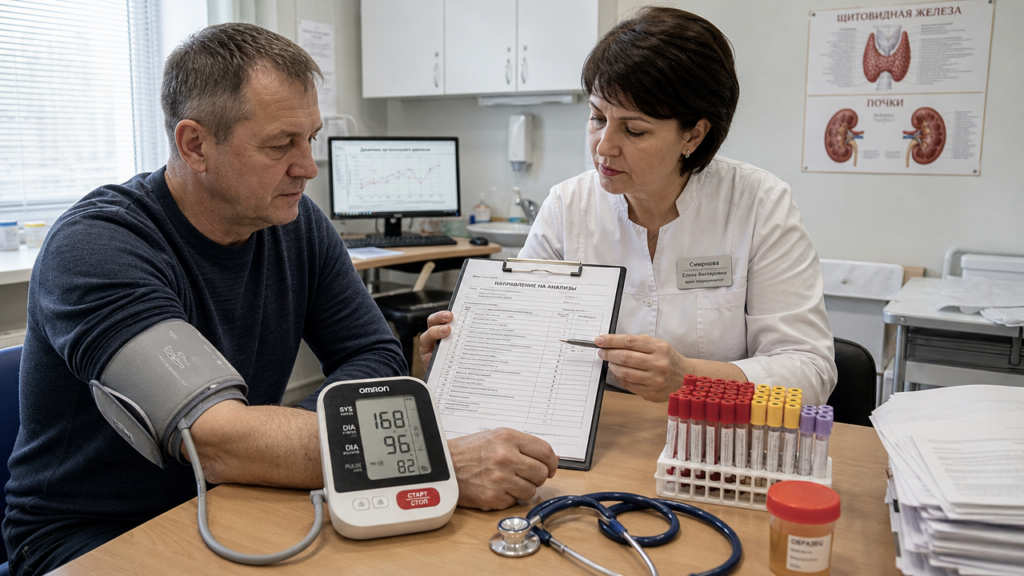
A sudden blood pressure spike above 140/90 mmHg is a risk signal, not a final diagnosis. The spike may come from stress, a missed antihypertensive dose, or a secondary cause such as kidney disease or thyroid dysfunction. Two office measurements averaging above 140/90 mmHg confirm hypertension. A sudden spike with severe headache, dizziness, or vision changes may indicate a hypertensive crisis and needs urgent care.
First, Rule Out White Coat and Masked Hypertension
White coat hypertension means high readings only at the clinic because of anxiety. Masked hypertension means normal clinic readings but high home readings, and it carries a risk similar to sustained hypertension. Take two readings at home after five minutes of rest with a certified upper-arm tonometer. Avoid caffeine, smoking, and stress for 30 minutes before the reading.
What Tests Should Be Taken for Blood Pressure Spikes: Blood and Urine Panel
A blood and urine panel helps investigate secondary causes and early organ damage. The table below lists the core tests for blood pressure spikes.
| Test | What It Detects | Why It Matters for a Spike |
|---|---|---|
| CBC (general blood analysis) | Red and white cell counts and other blood abnormalities | Helps identify blood disorders relevant to the assessment |
| Serum creatinine | Kidney filtration | A rapid rise after starting an ACE inhibitor needs medical review and may indicate a kidney-related problem |
| Potassium and sodium | Electrolyte balance | Abnormal levels can point to an underlying hormonal or kidney-related problem |
| Aldosterone/renin ratio | Hormonal cause | Screens for hyperaldosteronism, a reversible secondary cause |
| TSH and free T4 | Thyroid function | Overactive or underactive thyroid can worsen blood pressure |
| Urine protein | Kidney damage | Protein in urine signals target-organ injury |
| Fasting glucose and cholesterol | Metabolic risk | Diabetes and high cholesterol increase vascular risk |
For venous blood analysis, fast for 12 hours, avoid alcohol for 24 hours, and avoid stress or smoking for 30 minutes before the draw. Do not stop prescribed medications unless a clinician tells you to; ask how each medication may affect the test.
Cardiac and Organ Damage Tests for Blood Pressure Spikes
An ECG checks for signs of cardiac strain or a previous infarct. Echocardiography shows ventricular hypertrophy, diastolic dysfunction, atrial enlargement, valve problems, and reduced ejection fraction. Twenty-four-hour ambulatory monitoring tracks blood pressure during daily activity and can reveal episodic spikes that a single office reading misses. Rhythm monitoring may be added when an irregular heartbeat is suspected. Add an eye exam for retinopathy and a kidney ultrasound when kidney disease is suspected or when creatinine or urine protein is abnormal.
What to Do During a Sudden Spike at Home
A sudden spike with severe headache, dizziness, vision changes, or nosebleeds may indicate a hypertensive crisis. Stop activity, rest in a quiet room, and open a window for fresh air. Call emergency services, especially when symptoms are severe or worsening. Do not take an extra dose of antihypertensive medication without medical advice. Missed medication and stress are common triggers, so record the time of the spike and any skipped doses for the emergency team.
Secondary Hypertension Screening
Venous blood analysis can help investigate secondary hypertension at the first diagnosis, particularly in young or elderly patients and in resistant cases. Kidney disease may require urine and blood tests and an ultrasound. Hormonal imbalances require targeted testing. A spike that recurs despite multiple antihypertensive drugs is a red flag for secondary hypertension.
Practical Testing Sequence for a Blood Pressure Spike
If a spike occurs without severe symptoms, confirm it with two home readings five minutes apart. If the average is above 140/90 mmHg, discuss CBC, creatinine, potassium and sodium, the aldosterone/renin ratio, TSH and free T4, urine protein, fasting glucose, and cholesterol with a clinician. An ECG can help assess cardiac strain or prior heart damage. If symptoms or signs of organ damage appear, seek emergency care rather than waiting for outpatient tests.
Stroke risk rises significantly with hypertension above 140/90 mmHg. A sudden spike should be confirmed, assessed for secondary causes, and evaluated for effects on the heart, kidneys, brain, and eyes.